
Introduction
Web design has come a long way from static pages and rigid templates. Today, websites can adapt, learn, and respond — all thanks to artificial intelligence (AI).
Modern businesses are no longer just creating websites; they’re crafting intelligent digital experiences that understand users on a deeper level. Whether it’s tailoring content based on behavior, optimizing layouts in real time, or predicting what users want before they click — AI is redefining how brands connect online.
AI-driven web design isn’t just a trend; it’s becoming the foundation of digital personalization, where every visit feels uniquely relevant.
From Static to Smart Design
Traditionally, web design relied heavily on fixed layouts, manual A/B testing, and guesswork. Designers and marketers had to anticipate what users might prefer — often without real-time data to back those decisions.
AI changes this completely. With machine learning and predictive analytics, websites can now study visitor patterns, analyze data instantly, and make subtle design adjustments that improve engagement.
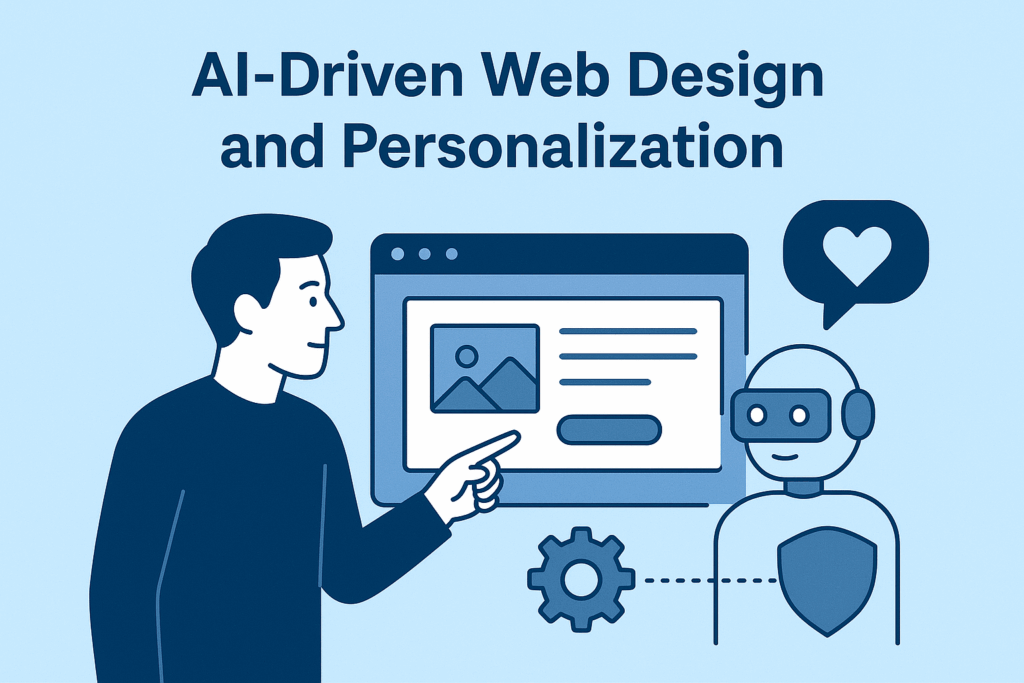
For example, AI can automatically rearrange elements like headlines, images, or call-to-action buttons based on what works best for each visitor. A returning user might see more advanced solutions or products they explored earlier, while a new visitor might get a simplified overview to help them start their journey.
The result? A smarter, faster, and more intuitive user experience that grows more accurate with every interaction.
How AI Personalization Works
At its core, AI personalization uses data, behavior tracking, and predictive algorithms to tailor each user’s experience.
Every click, scroll, or search feeds data into an intelligent system that learns patterns over time.
Here’s how it typically works:
- Data Collection – AI gathers data from user interactions, location, device type, and preferences.
- Pattern Recognition – Algorithms analyze this data to identify trends, such as what content or layout performs best.
- Adaptive Experience – Based on these insights, the system automatically adjusts website elements — from content placement to recommended products or blog posts.
This means no two users see the exact same version of a site. Each journey is subtly optimized for that person, increasing engagement and reducing bounce rates.
Benefits of AI in Web Design
When implemented effectively, AI-driven design offers measurable business advantages:
- Personalized Experiences at Scale
AI allows websites to deliver customized content for thousands of users simultaneously — something impossible to do manually. - Improved User Engagement
By understanding visitor intent, AI keeps users on the site longer, guiding them naturally toward relevant content or products. - Faster Decision-Making
Instead of spending months testing layouts, AI continuously learns and improves, providing data-backed insights in real time. - Higher Conversions
Smart recommendations and adaptive CTAs (calls-to-action) lead to more sign-ups, downloads, and sales. - Reduced Workload for Teams
Automation takes care of repetitive optimization tasks, allowing creative teams to focus on strategy and storytelling.
In short, AI doesn’t replace designers — it empowers them with intelligent tools to create better digital experiences.
Real-World Applications
Businesses across industries are already using AI to enhance their web presence in practical ways:
- Dynamic Content Recommendations – E-commerce sites like Amazon suggest products based on browsing history and purchase patterns.
- Chatbots and Virtual Assistants – AI chatbots offer instant support, improving customer satisfaction while reducing response time.
- Predictive Search and Voice Interaction – Search bars that anticipate queries and voice-driven navigation make browsing smoother.
- Visual Design Assistance – Platforms like Wix ADI or Adobe Sensei use AI to automatically generate layout options or optimize design elements.
- Email and On-Site Personalization – Visitors see content, blogs, or offers aligned with their previous actions or location.
Even smaller businesses can leverage these tools — most AI features are now integrated into mainstream platforms like HubSpot, Shopify, and WordPress.
Challenges and Considerations
While AI adds intelligence to design, it also introduces new challenges.
One of the biggest concerns is data privacy. Personalization depends on data collection, so transparency and compliance with regulations like GDPR are essential.
Another issue is over-automation.
A fully AI-driven experience can sometimes feel impersonal or too mechanical if not balanced with human creativity. The best results come from a thoughtful mix — AI handles efficiency and insights, while human designers focus on emotion, storytelling, and brand identity.
Lastly, cost and integration can be barriers for smaller teams. However, as AI tools become more accessible, these challenges are quickly shrinking.
The Future of AI-Driven Design
Looking ahead, the role of AI in web design will only expand.
Future websites might use real-time emotional analysis — adjusting visuals or tone based on a user’s reactions. AI could design and test entire page variations in seconds, continuously evolving to fit audience behavior.
Hyper-personalized user journeys will soon be the standard. Imagine visiting a website that greets you by name, predicts your intent, and instantly presents the most relevant solution — without you even asking.
But amid all the innovation, one thing remains constant: the human touch matters.
AI may handle patterns and predictions, but creativity, empathy, and brand storytelling will always come from people.
Conclusion
AI-driven web design is changing the way businesses think about digital experiences. It’s not about replacing designers or marketers — it’s about amplifying their abilities.
By using intelligent systems to understand users, optimize performance, and personalize interactions, businesses can create websites that are more intuitive, engaging, and effective.
The future belongs to brands that can combine human creativity with AI intelligence — crafting digital experiences that feel both smart and genuine.
Because when technology and design work together seamlessly, your website becomes more than a platform — it becomes a living, learning part of your business.